CK Economic Insights
Why Maritime Trade, Climate Risk, and Technology Are Reshaping the Global Economy
The blue economy offers new opportunities for growth. Its long-term value will depend on the resilience of the industries and ecosystems supporting it.
Evan J. Conkling · October 9, 2026 · 6 min read
ArchivePublished before CK Economics turned to global trade on October 16, 2026. Kept here so links to it keep working.
CK Economic Insights — Issue No. 001
Why Maritime Trade, Climate Risk, and Technology Are Reshaping the Global Economy
The blue economy offers new opportunities for growth. Its long-term value will depend on the resilience of the industries and ecosystems supporting it.
The big picture
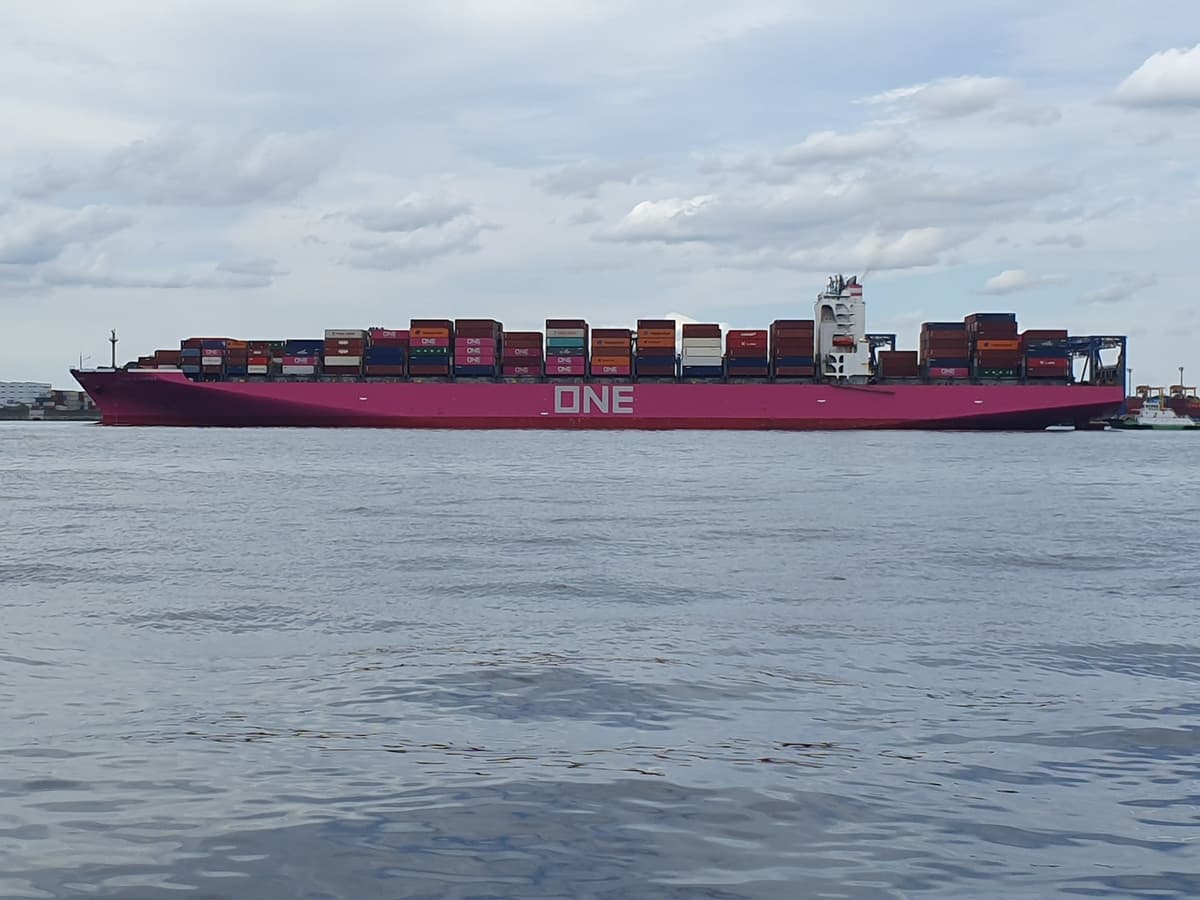
The global economy depends on the ocean in ways that are easy to overlook. Cargo ships move consumer products and industrial inputs between continents; fisheries and tourism support coastal livelihoods; and emerging marine technologies are attracting attention from businesses and policymakers. According to UN Trade and Development (UNCTAD), around 80% of international merchandise trade by volume is carried by sea [1].
Yet expanding ocean-based economic activity raises a harder question: can investment and productivity grow without weakening the natural systems and coastal infrastructure on which that growth depends? The answer matters not only to coastal communities but also to inland manufacturers, retailers, and households exposed to global supply-chain disruptions.
What counts as the blue economy?
The World Bank describes the blue economy as the sustainable use of ocean resources for economic growth, improved livelihoods, and jobs while preserving the health of ocean ecosystems [2]. This is narrower than the ocean economy in general: activity can be ocean-related without necessarily being sustainable.
The distinction is economically important. A fishery may increase short-run output by raising catches, yet undermine its future earning capacity if harvesting exceeds biological recovery. Similarly, coastal development may generate immediate revenue while increasing exposure to flooding or erosion. Measures of output and employment alone cannot fully capture those trade-offs.
What the trade data shows
UNCTAD’s Review of Maritime Transport 2025 reported 2.2% growth in global seaborne trade volume for 2024 and projected just 0.5% growth for 2025 [3]. The difference is 1.7 percentage points—a sharp deceleration in the outlook, not a prediction of declining total trade volumes. Because the 2025 figure is a projection from that publication, it should not be read as a subsequently verified annual outcome.
Figure 1 | Global seaborne trade volume growth

Source: UNCTAD, Review of Maritime Transport 2025 [3]. The 2025 observation is a forecast from that report; values are not an original CK Economics estimate.
A slowdown in seaborne trade growth can matter through several channels. Shipping companies may reassess capacity and fleet investment; ports may revisit expansion assumptions; and manufacturers may confront different freight-market conditions. The effects are not automatic: freight prices also depend on vessel supply, route diversions, fuel costs, and congestion. Slower volume growth alone does not prove that freight rates will fall or that employment will contract.
The original manuscript also cited UNCTAD ocean-related goods trade of approximately $1 trillion in 2025, up 7.8% from 2024 [4]. This measure should not be confused with the value of all merchandise transported by sea: it refers to a defined group of ocean-related goods. The classification and latest data vintage should be checked before using it in comparative analysis.
Climate risk is an economic risk
Sea-level rise, coastal flooding, warming waters, and extreme weather can damage infrastructure, interrupt operations, and increase maintenance or insurance costs. The economic question is not whether every protective investment is worthwhile, but which investments reduce expected losses enough to justify their costs.
Consider a hypothetical port resilience project. A defensible appraisal would compare upfront capital spending and future maintenance with avoided physical damage, reduced downtime, and the value of uninterrupted trade. It would also test multiple climate scenarios, discount future cash flows, and disclose uncertainty. Some projects may pass a cost-benefit test; others may not. The analysis must be specific to the asset and exposure.
Technology creates opportunities—and trade-offs
Port automation, artificial intelligence, marine robotics, monitoring systems, and offshore renewable energy could reshape ocean industries. Automation may improve throughput and scheduling, but also change demand for particular jobs and skills. Offshore energy may diversify supply while requiring major upfront capital, transmission infrastructure, permitting, and financing.
Technical feasibility is therefore only one part of the investment decision. Economic viability also depends on utilization, operating costs, workforce adjustment, regulation, and the expected return relative to alternatives. Claims about net job creation or productivity gains require project-level evidence rather than assumptions about technology alone.
Why Southern California matters
The Ports of Los Angeles and Long Beach offer a useful starting point for studying these relationships. Their combined role in international trade connects maritime activity with logistics, warehousing, manufacturing, and regional infrastructure. At the same time, Southern California faces decisions about cleaner equipment, freight movement, automation, and coastal resilience.
For CK Economics, the research opportunity is to connect these developments through a consistent evidence base. A future Southern California Blue Economy Monitor could track container throughput, loaded imports and exports, transportation and warehousing employment, and selected environmental indicators. Each series would need a clearly defined geography, reporting period, unit, and source.
Importantly, container throughput is not GDP, and a change in port volume cannot automatically be treated as an equal change in local employment or economic output. Relationships should be tested using aligned data, appropriate controls, and transparent methods.
CK Economics analysis: three implications
- Resilience should be evaluated as an economic investment. Port and coastal infrastructure decisions should consider expected disruption costs alongside construction costs, rather than treating climate adaptation as separate from economic competitiveness.
- Technology policy should measure both productivity and adjustment costs. Evaluations of automation and cleaner maritime technologies should account for operational gains, workforce effects, capital requirements, and distributional consequences.
- Better data can improve decisions. Public indicators are scattered across port authorities, statistical agencies, and research institutions. Consistent definitions, historical revisions, and reproducible analysis can help prevent misleading comparisons.
What we’re watching
- San Pedro Bay trade: Monthly loaded imports, loaded exports, empty-container movements, and twelve-month throughput trends.
- Maritime costs: Freight-rate movements, route disruptions, and their potential effects on supply chains.
- Technology and labor: Evidence on port electrification, automation, capital spending, and occupational change.
- Coastal resilience: New infrastructure proposals and the assumptions used to justify their expected benefits.
Looking ahead
The blue economy’s next phase will not be determined simply by how much investment flows into ocean industries. It will depend on whether that investment produces durable productivity gains, resilient infrastructure, viable businesses, and healthy ecosystems. Independent economic research can help separate plausible opportunities from claims that are not yet supported by evidence.
CK Economic Insights will continue to examine these questions through accessible reporting, documented sources, and increasingly original analysis of Southern California and the wider maritime economy.
Sources and methodological notes
- UN Trade and Development (UNCTAD). Maritime transport statistics and publications. https://unctad.org/
- World Bank. PROBLUE: The World Bank’s Blue Economy Program. https://www.worldbank.org/en/programs/problue
- UNCTAD. Review of Maritime Transport 2025. https://unctad.org/publication/review-maritime-transport-2025
- UNCTADstat. Ocean Trade Data Insights. https://unctadstat.unctad.org/insights/theme/248
- World Bank. Fisheries, Aquaculture and Ocean Economies. https://www.worldbank.org/ext/en/topic/environment/fisheries-aquaculture-and-ocean-economies
Methodological note: Figure 1 reproduces two figures attributed to UNCTAD in the original issue and calculates their arithmetic difference (2.2 − 0.5 = 1.7 percentage points). It is a source-based illustration, not an independently estimated model. The other arguments are qualitative economic interpretation; no original causal or econometric results are claimed. Source values should receive a final editorial verification against the linked releases.